Social Security and Social Security Death Index
(From rootsweb) Social Security Sleuthing
by Pamela Boyer Porter, CGRS
For many people born in the nineteenth century before formal birth registration was required,
Social Security records can provide valuable vital facts about birthplace and date, death date, or parents’ names.
They can also give you clues to
where a person lived
or even worked at a given time,
where they resided when they first applied for their Social Security card,
where they last resided, and
the residential area of the person who received benefits upon their death
History of Social Security
Let’s begin with a short history lesson about Social Security. You’ll need to remember a few important dates as you seek clues to your ancestors in the Social Security records.
President Franklin D. Roosevelt signed the Social Security Act into law on August 14, 1935.
By June 30, 1937, the Social Security Board had established field offices that assigned Social Security numbers until 1972
Since 1972, all Social Security numbers have been issued centrally from Baltimore.
Do you know where your grandfather worked when he first applied for a Social Security card?
Up until 1947, Social Security card applications included the applicant’s employer and the employer’s address.
Someone you are seeking may not have applied for a Social Security number until it was needed for Medicare benefits, beginning in 1965 for those age 65 or older.
What about Military Records?
In 1967, the Department of Defense began using Social Security numbers instead of military service numbers to identify Armed Forces personnel. Be sure to check discharge papers lying around the house or recorded at the county courthouse to see if the service number is actually a Social Security number.
Not just U.S. citizens receive Social Security numbers.
In 1972 the law required the Social Security Administration (SSA) to issue numbers to any legally admitted alien upon entry, and to obtain evidence of age and citizenship or alien status and identity.
Do you have a railroad worker in your family tree?
Up until 1963, railroad employees were assigned Social Security numbers in a series from 700-728.
Since 1989, an SSA program has enabled parents to automatically obtain a Social Security number for a newborn infant when the birth is registered with the state, a sure indicator of place of birth
What’s in a Number
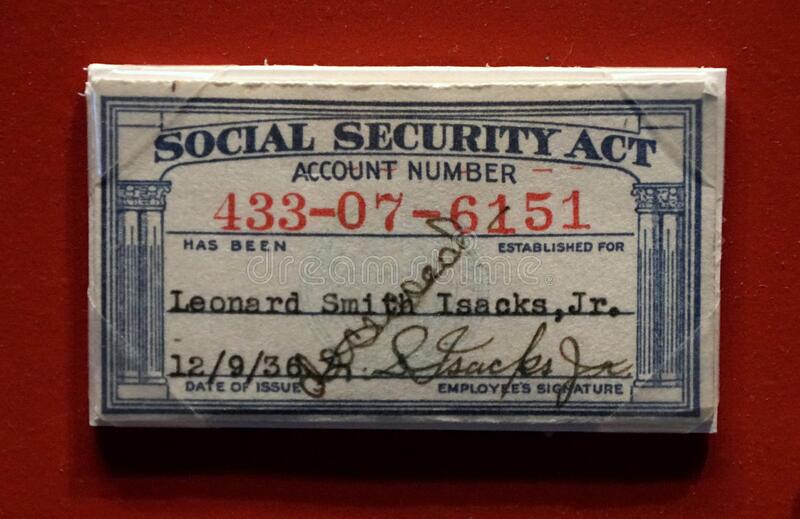
The first three digits of a Social Security number, known as the area number, are assigned by geographical region.
Visit the https://www.ssa.gov/policy/docs/ssb/v69n2/v69n2p55.html for a history of social security numbers.
Visit this site to discover the social security area numbers https://www.ssa.gov/employer/stateweb.htm
Prior to 1972, cards were issued in local Social Security offices around the country, and the area number represented the state in which the card was issued.
Since 1972, when the SSA began assigning numbers and issuing cards centrally from Baltimore, the area number is assigned based on the zip code in the mailing address provided on the application for the original Social Security card.
A word of warning: the applicant’s mailing address may not be the same as his or her place of residence. Therefore, the area number does not necessarily represent the applicant’s state of residence either prior to 1972, or since.
The area numbering scheme was developed in 1936, before computers, to make it easier for the SSA to store the applications in Baltimore files that were organized by regions and alphabetically.
Originally, it was intended for SSA internal use and convenience, and was not intended for anything more. However, it’s a good clue for the family sleuth!

John David Sweeney, Jr.
Mr. Sweeney was the son of a wealthy factory owner, and had grown up in a 15-room Westchester County home staffed with servants. In an effort to learn the family business, Mr. Sweeney was working as a shipping clerk for his father at the time he filled out his application for a social security card. The Sweeneys were Republicans and the whole family voted for Landon in 1936, although John Jr. allowed that he liked the new Social Security program even though he didn’t think much of the New Deal. John Sweeney died of a heart attack in 1974 at the age of 61 without ever receiving any benefits from the social security program; however, his widow was able to receive benefits based on his work until her death in 1982.
Jack Sweeney was issued the first social security number https://www.ssa.gov/history/ssn/firstcard.html#:~:text=This%20particular%20record%2C%20(055%2D,been%20issued%20the%20first%20SSN
Here’s how Social Security Number are created:
https://www.ssa.gov/history/ssn/geocard.html
Here’s where to verify a Social Security Number
https://www.ssa.gov/employer/verifySSN.htm
Where Can I Find a Social Security Number?
A variety of documents may reveal a person’s Social Security number.
- Look carefully at the death certificate if you have it.
- Military records since 1967 use the person’s Social Security number as an identifier.
- Check with the funeral home that handled arrangements ‘they may have a record of the deceased’s Social Security number.
- A life insurance policy or death claim may list it.
- Some states use the Social Security number as a driver’s license number.
- Look around the house if the deceased or their minor children received any kind of Social Security benefits, you may have papers listing the Social Security number in a file box in your home.
- And there’s always the Social Security Death Master File (SSDMF), also known as the Social Security Death Index (SSDI).
The Social Security Death Index
Since 1962, the SSA has used an electronic system, or computer, to maintain records of approximately 60 million deaths that have been reported to them.
This database is in tape format, which is not searchable by the public. However, the U.S. Department of Commerce does sell these reels of magnetic tape to genealogical services that reformat the information on their own searchable computer databases or publish it on cd-roms.
All so-called Social Security Death Index information comes from the same source ‘ the Social Security Administration’s records. These include Social Security number, last name and first name, date of death and date of birth, zip code of last residence, and zip code of lump sum payment recipient.
As with any electronic data, problems exist in the original database, and these errors flow through to all versions of the Social Security Death Index. For example, the SSA database allows only twelve letters for last name and nine letters for first name, with all other letters being truncated, or left off
Also, data entry errors do occur. If you can’t find someone by first and last name and birth date, try searching by first name only and as much other information as you can to narrow the search.
In addition to data entry errors, be aware that the death date may contain month and year only, especially before 1988.
Another issue is that the zip code information may lead you in the wrong direction. Zip codes were not used until 1963, and the location assigned to a zip code is based on U.S. Postal Service assignment of localities to a given zip code. This may not be the town where the person actually lived, nor where final benefits were sent. For example, a zip code of 63017 results in two Missouri town names-Chesterfield, and Town and Country.
Do not be fooled into thinking the zip code or locality of last residence is where the person died. They may have last resided in Patterson, Missouri, but actually died in a hospital in Memphis, Tennessee. In that case, you would never find a death certificate in Missouri. Having told you all the pitfalls to watch out for, I will say that you can still find many valuable clues in the SSDI.
Who’s in the SSDI?
Let’s start with who is not in the SSDI.
Everyone who received a Social Security number or paid withholding tax is not in the database.
My grandmother, who paid withholding taxes most of her life, looked forward to collecting benefits upon retirement at age 60 in 1964. Unfortunately, she died at age 59-1/2. She had a Social Security number, and she paid her fair share of withholding, yet she is not in the SSDI. Why? Her death was not reported to the Social Security Administration by anyone. She had not yet drawn a Social Security check, so there was no need to notify the SSA of her death.
Everyone who received Social Security benefits is not in the database.
A young man died in 1953, leaving a pregnant wife. The child received Social Security benefits based on her father’s benefits until she was eighteen years old. Yet no record of her father exists in the SSDI. Why? Because his death was not reported to the Social Security Administration. He was 26 years old when he died, so there was no reason to notify the SSA.
So who are all those people in the SSDI? They are persons who
- Had a Social Security number, and
- Whose deaths were reported to the Social Security Administration.
A survivor may have requested death benefits from the SSA.
A family member may have notified the SSA to stop benefits to the deceased. A funeral home may have notified the SSA as a service to the family.
Whether or not the deceased ever received Social Security benefits, if someone notified the SSA of their death, and they had a Social Security number, they probably appear in the SSDI.
When does this index begin? The SSA began to use a computer database in 1962. About 98 percent of the people in the SSDI died after 1962, although a few deaths do date back as far as 1937.
Where Can I Look at the SSDI?
Ancestry.com
Family search.org
MyHeritage.com
External links
These websites may require subscription/registration to search or get results
- United States Social Security Death Index at FamilySearch.org
- U.S. Social Security Death Index, 1935–2014 at Ancestry.com
- Social Security Death Index Records at NewspaperArchive.com
- Social Security Death Index at GenealogyBank.com
- Social Security Death Index at FindMyPast.com
- Searching the Social Security Death Index (SSDI) in One Step at SteveMorse.org
- Social Security Death Index is 89,430,629 Death Records No Fee to Search at MyTrees.com
I Found Him! Now What?
When you find a person in the SSDI, you will glean a few facts that you may not have known.
Take it one step beyond these facts to learn more.
You know a birth date, and the state where the original Social Security card was issued, or at least where it was mailed to the applicant. Look for a birth certificate or census record in that state.
- You have a death date, and location of last residence. Look for an obituary in the local newspaper to determine a death place. Then request a death certificate or contact the funeral home for any records they might have.
- You have the location where the person’s lump sum distribution was sent. Search an on-line telephone directory for the last name of the person you think may have received the benefits, and contact them.
- You have the Social Security number. Splurge! Send $ for the original application, as described below.
Request an SS-5
The SS-5, Application for Social Security Account Number, contains the following information:
Social Security number, full name (including women’s maiden names), address at time of application, employer and employer’s address (pre-1947 applications only), age at last birthday, date and place of birth, parents’ full names (including mother’s maiden name), sex, color, and whether the applicant had previously applied for Social Security or Railroad Retirement.
It also contains the application date and the applicant’s actual signature. Wouldn’t you like to have this information about the person you are researching?
Under the Freedom of Information Act (FOIA), SSA will fulfill requests for applications of deceased persons for $, if you provide the Social Security number. If you do not know the number, the search fee is $. Be sure to include the person’s Social Security number, full name (including maiden name and name at death), sex, date and place of birth, date of death, and parents’ names. Provide proof of death, or state that the person is listed in the SSA Death Master File. Include the following statement: “Microprint required – Printout not sufficient.” (Otherwise, you may receive a computer-generated printout instead of a copy of the original application.)
Mail your request and payment to:
Social Security Administration
Office of Central Records Operations
300 N. Green St.
P.O. Box 33022
Baltimore, MD 21290-3022
Now you know who is really in the Social Security Death Index, and all the facts that are available from that source. You’ve learned how to obtain an individual’s application for Social Security card, whether or not they ever collected benefits. You’ve seen how these few vital facts can lead you to other richer sources. So what are you waiting for? Start looking for those nineteenth and twentieth-century ancestors online today.
Social Security Death Index
From the Wiki at Family Search
https://www.familysearch.org/wiki/en/United_States_Social_Security_Administration_Records
What is in This Collection?
The “Social Security Death Index” is a database created from the Social Security Administration’s Death Master File.
This is an index of deceased individuals whose deaths were reported to the Social Security Administration. It has been kept since 1962, when operations were computerized.
The index includes a few deaths from 1937 to 1961, about 50 percent of deceased persons from 1962 to 1971, and about 85 percent of deceased persons from 1972 to 2005.
Married women are usually listed in this index under their married name.
Last names longer than 12 letters are shortened to 12 characters.
The death place listed is not necessarily the place of death, it is the last place of residence that the Social Security Administration has on file.
The death date, residence at time of death, Social Security number, and state of issue are usually reliable information since the information comes directly from the Social Security Administration’s master file. However, realize that errors may have occurred when the information was originally entered.
Information listed for the name and birth date was provided by an informant and may be inaccurate.
The Social Security Administration (SSA) was created in 1936 and began issuing Social Security numbers to track the earnings that workers reported for retirement benefits.
In 1961, the Internal Revenue Service began using Social Security numbers to identify taxpayers.
The SSA provides an extract from its file for distribution through the Department of Commerce’s National Technical Information Service. Because this extracted file deals with deceased persons, the information is considered to be in the public domain. Several organizations have purchased this file and posted it to their websites.
The purpose of this index was twofold:
!) to protect the benefits to beneficiaries of pension funds, insurance benefits, and assist Federal, State and Local governments and others responsible for verifying deceased person(s) in support of fulfillment of benefits to their beneficiaries;
2) and to identify and prevent identity fraud, and identify persons who are deceased.
In 2014 Federal legislation changed the rules for access to the Social Security Death Master File. Records for the most recent 3 years are not available. This collection was last updated in 2016.
The following is a disclaimer from National Technical Information Service.
“The products advertised on this website contain the complete and official Social Security Administration (SSA) database extract, as well as updates to the full file of persons reported to SSA as being deceased. SSA authorizes the use of this database as a death verification tool, but notes that the Death Master File (DMF) may contain inaccuracies. Thus, SSA cannot guarantee the accuracy of the DMF. Therefore, the absence of a particular person on this file is not proof that the individual is alive. Further, in rare instances it is possible for the records of a person who is not deceased to be included erroneously in the DMF.”
For additional information about the index please visit the National Technical Information Service’s page Limited Access Death Master File.
Image Visibility
Whenever possible FamilySearch makes images and indexes available for all users. However, rights to view these data are limited by contract and subject to change. Because of this there may be limitations on where and how images and indexes are available or who can see them.
Please be aware some collections consist only of partial information indexed from the records and do not contain any images.
For additional information about image restrictions see Restrictions for Viewing Images in FamilySearch Historical Record Collections.
What Can These Records Tell Me?
The following information may be found in these records:
- Name of the deceased (Married women are usually listed by their married name.)
- Birth date
- Death date
- State or territory where the Social Security number was issued
- Death residence, zip code and corresponding localities
The death residence is the last place of residence that the Social Security Administration has on file. It is not necessarily the place where the death occured.
How Do I Search This Collection?
To search the index it is helpful to know:
- The name of your deceased ancestor
- The place where your ancestor died
- The approximate date of the death
Search the Index
Search by name on the Collection Details Page.
- Fill in the search boxes in the Search Collection section with the information you know
- Click Search to show possible matches
How Do I Analyze the Results?
Compare each result from your search with what you know to determine if there is a match. This may require viewing multiple records or images. Keep track of your research in a research log.
What Do I Do Next?
I Found the Person I Was Looking For, What Now?
- Add any new information to your records
- The death date and place may help you obtain a death certificate which may lead you to additional records
- The birth date or age along with the place of birth to find your ancestor’s birth records and parents’ names
- If your ancestor was born before 1940 you can use the birth date or age along with the place of birth to find the family in census records
- When 2 geographical divisions are given they represent County/State as opposed to City/State. For example Jefferson, Texas refers to the county of Jefferson not the city of Jefferson
- Use the Zip Code of last residence to determine the place of residence
- The index only includes the names of deceased individuals whose deaths were reported to Social Security
- Surnames longer than 12 letters are truncated to 12 characters. You may need to retry your search using only the first 12 letters of the name
I Can’t Find the Person I’m Looking For, What Now?
- Look for variant spellings of the names
- Try searching by surname only
- Married women are usually listed under their married names
- If a woman was married multiple times search using the surnames of all husbands
Research Helps
The following articles will help you in your research for your family in the United States.
At Ancestry
Searching the collection
- From any page on Ancestry®, click the Search tab and select Card Catalog.
- In the Keywords field, type SSDI and click Search.
- On the right, click U.S., Social Security Death Index, [years].
- Enter information and click Search.
Search tips
If you’re having trouble finding what you’re looking for in the SSDI, these strategies can help:
- Search with spelling variations.
- Look for nicknames and abbreviated names.
- Search the indexes and records of nearby counties.
- Try filling in only the first name and date of death fields.
Many deceased Americans aren’t listed in the SSDI because their deaths weren’t reported. If don’t find your relative in the SSDI, but he or she was enrolled with the Social Security Administration, you may be able to request a photocopy of their original Social Security Application (SS-5). (Applying under Freedom of Information Act-FOIA)
The SS-5 application form contains the following information:
- First and last name at birth
- Mailing address (when the application was submitted)
- Age at last birthday
- Date and place of birth
- Father’s full name
- Mother’s full name, including maiden name
- Sex and race
- Whether the applicant previously applied for Social Security number or Railroad Retirement
- Current employer’s name and address
- Date signed
- Applicant’s signature
At Ancestry.com U.S., Social Security Applications and Claims Index, 1936-2007
This database picks up where the SSDI leaves off, with details such as birth date and parents’ names extracted from information filed with the Social Security Administration through the application or claims process.
Criticisms
Given the growing problem of identity theft and the importance of the Social Security number as a personal identifier in the United States, it might seem unusual that these identifiers are released publicly.
However, because the documents held by the Social Security Administration are government records, it is required to make the information public under the Freedom of Information Act (FOIA).[c
In fact, the related Death Master File is used to prevent fraud so that no one can steal the identity of a dead person, and take out a credit card or a bank loan in a dead person’s name.
A recent government audit revealed that the Social Security Administration had incorrectly listed 23,000 people as dead in a two-year period. These people have sometimes faced difficulties in convincing government agencies that they are actually alive; a 2008 story in the Nashville area focused on a woman who was incorrectly flagged as dead in the Social Security computers in 2000 and has had difficulties, such as having health insurance canceled and electronically filed tax returns rejected.
This story also noted that people in this situation can be highly vulnerable to identity theft because of the release of their Social Security numbers.[
In November 2011, due to privacy and identity theft concerns, the Social Security Administration redacted and no longer included death data derived from State sources. This resulted in an approximately 33% drop in reported deaths.
On December 18, 2011, Ancestry.com, changed access to the SSDI by moving the SSDI search behind a paywall, and stopped displaying the Social Security information of people who had died within the past 10 years. Some of their originally free information is now available via paid subscription only. However, other sites still provide free access.
In March 2012, the entire Death Master File, edition of November 30, 2011, was made available for download. A more recent version was made available May 31, 2013. Updates are also available by a subscription service. However, prices for both the full file and the updates are in the business-only range, not what most hobbyists (such as amateur genealogists) would be willing to pay.
A review by the Government Accountability Office in 2013 found that the Social Security Administration and other federal benefit-paying agencies that use data from the Death Master File are potentially vulnerable to making improper payments due to errors or processes that could lead to errors.[
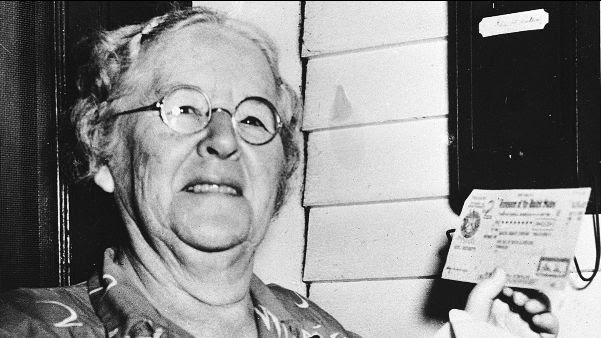
Today in 1940, Ida May Fuller of Ludlow, Vermont, received the first monthly Social Security retirement check—in the amount of $22.54. Fuller had worked for three years under the Social Security program (which had been established by legislation in 1935). The accumulated taxes on her salary over those three years were $24.75. She lived to be 100 years old, collecting $22,888 in Social Security benefits.