Preparing For the 1950 Census
Background
Censuses have been taken in the United States every ten years since 1790, the latest being 2020.
The last census available for public viewing is currently the 1940 Census
Since 1942 censuses were released to the public after being closed for 72 years except the 1900 Census which was released in 1973 after much controversy.
Click on the following link to learn about the 72 Year Rule. https://stevemorse.org/census/rule72.html
The 1950 Census is due to be released to the public at 12:01 AM April 1st 2022
When released, the census information will be available for browsing April 1st.
BUT…….There will be no index of any kind!!!!
Locating Someone:
So, how does someone locate themselves, their families or others when there is no index and the Census is not searchable?
Answer:
The searcher will need the Enumeration District where the family lived.
This paper will explain how to locate the ED and what information is on the 1950 Census
An Enumeration District (abbreviated ED) is defined as an area that can be canvassed by a single census enumerator in a census period, usually a few weeks.
The denser the area, as in an urban setting, the smaller the ED and conversely, the less dense (more rural) the area, the larger the ED.
There will be more ED’s in an urban setting than in a rural area.
Steve Morse has a website at https://stevemorse.org
which offers historical scenarios and useful helpful tools intended to help the genealogist crack the ED code so they can get to the information hidden within.
Locating An Address:
To locate an ED the researcher must know the residence address of the individual or family they are searching for. Here are some suggestions on where to look:
Old address book
Marriage Certificate or license
Birth Certificate
Death Certificate
City Directory
Phone Book
Diary
Employment record
Letters-Envelopes
Local Newspapers/articles
Books
Naturalization Records
School Records-Report Cards
Church Records
Social Security applications or paperwork
Military Records
Personal Memory
More
To Locate an ED once you have an Address:
Use the One Step Unified ED Finder at https://Stevemorse.org
The ED Finder will ask for State, County, City, Street Number, Street Name
Possibly a cross street if you know it
It will then give one or more ED suggestions and you may have to research further, such as look at maps and Ed boundary descriptions to decide which ED is the one desired.
Once you have an ED number begin looking at enumerations beginning with the first page.
You may also scan/browse through the pages looking at the left hand column for the street name or down the pages looking for the surname or whatever method you choose until you view the correct family.
On April 1st 2022 when the National Archives releases the information to the public, commercial database companies such as Ancestry, MyHeritage and Family Search will depend on transcribers to capture the images for their own database websites and work intensively and competively to create a searchable name index to the census.
Judging from the past when this happened in 2010 with the 1940 census and with earlier census unveilings commercial companies hired people to enter names into their databases as indexes and Family Search depended on volunteer transcribers contributing their time to do the same thing.
Family Search has a core of volunteer transcribers who utilize the Double Blind method of indexing. Two different transcribers working independently of one another are given the same page to index. Each person has no knowledge who the other person is.
As the two people complete and submit the same transcribed page, items on that page in which they are in agreement are accepted by a third volunteer, an arbitrator.
When there is a difference in interpretation, the item is sent to an arbitrator who looks at the item and either chooses to go with the interpretation of one or the other indexer or chooses to change the item totally.
According to transcription instructions each person is supposed to transcribe the record as written rather than as it should be corrected.
There was at least one instance working for Family Search on the 1940 census that Mic had a problem totally deciphering letters of a surname. He went out and looked at other censuses and figured out what the name was supposed to be and entered that name.
Later, he saw an accuracy report provided by Family Search which indicated his “correct” choice was rejected by the arbitrator. So, technically, he was wrong even though he went the extra mile to find the correct name and entering that, but in this case the name was not legible. During that canvass there was no way to place a note to the arbitrator what he had done. In later transcription projects there has been a place on the form for transcribers to make notes.
After the indexes were placed online, family researchers are provided an opportunity to submit their suggestion of a correct surname spelling. So, researchers will often see a second submitted surname for individualson a census or other record. Those suggested corrected surnames often do make it into the searchable indexes of most websites. This has helped me many times finding people I for whom I was searching.
Problem Solving Using City Directories and Google
As stated above one needs an ED to locate a person or family. And to find an ED one needs an address.
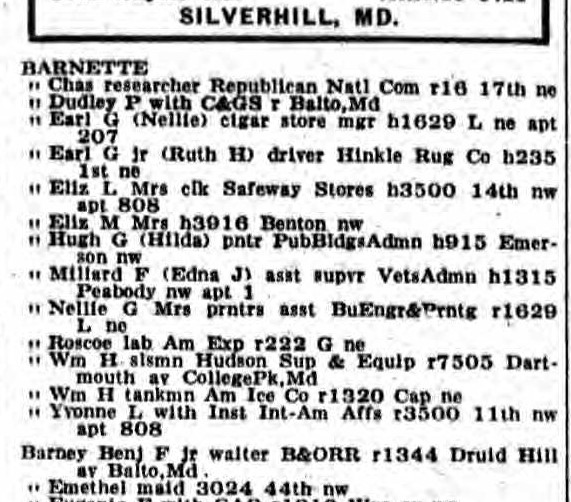
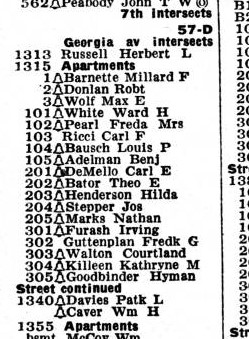
One of the best tools for locating addresses is a city directory which is similar to a telephone directory. City directories usually have two indexes. One index alphabetical and the other by street address.
Ancestry, Family Search and My Heritage are competitive with one another, each having large collections of city directories for most American cities.
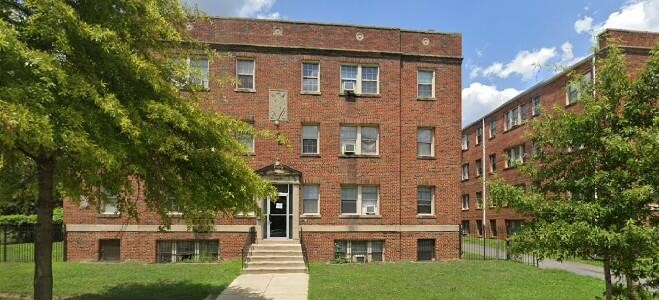
Here is a link to an exercise explaining the use of locating an ED using a city directory, google maps and internet searching.
Discovering The Census Enumeration District
When Does the One Step ED Finder Become Obsolete?
Steve Morse has indicated his ED Finders for previous censuses have not become obsolete because there always seem to be people who can not be found searching by name or other search methods.
Who was enumerated?
Below are two link which will take you to the instructions and questions given enumerators who were taking the census
https://www.census.gov/history/www/through_the_decades/census_instructions/1950_instructions.html
https://www.census.gov/history/pdf/1950instructions.pdf
During the 1950 census, approximately 143,000 enumerators canvassed households in the United States, territories of Alaska and Hawaii, American Samoa, the Canal Zone, Guam, Puerto Rico, the Virgin Islands, and some of the smaller island territories.
The U.S. Census Bureau also enumerated Americans living abroad for the first time in 1950. Provisions were made to count members of the armed forces, crews of vessels, and employees of the United States government living in foreign countries, along with any members of their families also abroad.
The instructions to enumerators for 1940 continued in 1950 to allow anyone to be designated as head of the household for relationship purposes, but if a woman was listed as head and her husband was present, he was reclassified as the head when the completed schedule was reviewed in the office. (At the time, the number of such cases was relatively small.)
College students in 1950, unlike in previous censuses, were counted where they lived, if away from home.
Also, in 1950, members of the Armed Forces who slept off post would be counted where they slept rather than where they were stationed.
Also, in 1950,
Enumerators were instructed to list people in a household in a specific order:
- Head of household, usually a male or husband
- Wife
- Unmarried Children in order of birth
- Married Sons and Daughters and their children
- Other Relatives
- Other Persons, such as lodgers, roomers, maids, or hired hands who live in and their relatives
Population Schedule Form was White 19” X 22” printed in green ink on both sides of page
Front included space for population information for 30 persons, each on a separate line
The reverse side was the Housing Schedule with spaces for information for 12 dwelling units that housed the persons enumerated on the front (Population) side.
Questions: (For Head of Household)
- Name of street, road, etc
- House and apartment number
- Serial number of dwelling unit
- Is this house on a farm (or ranch)?
- If 4 is No, /Is this place on a piece of 3 or more acres?
- Agriculture Schedule Number
Questions for All
- Names of all persons in house listed in list above- Last name first
- Relationship of those persons
- Race: W=White; Neg=Negro; Ind=American Indian; Jap=Japanese; Chi=Chinese; Fil=Filopino; Other race- Spell out
- M or F
- How old was he on last birthday? If under one year enter month
- Is he now Married?, Widowed? Divorced? Or Never Married?
- In what state of foreign country was he born in? If born outside the Continental US enter name of Territory, possession or foreign country born, Distinguish Canada French from Canada-Other
- If foreign born- Is he naturalized? Yes or No. Use A P for Born Abroad of American Parents
Questions for Persons 14 Years of Age or Over
- What was this person doing most of last week? Working, Keeping House, or something else? Wk; H, Ot, or U for Unable to Work
- If H or Ot under item 15- Did this person do any work at all last week, not counting work around the house- Include work for pay, in own business, profession, on farm or unpaid family work? Yes or No
- If No in item 16: Was this person looking for work? Yes or No
- If No in item 17: Even thoug he did’nt work last week, does he have a job or business? Yes or No
- If Work to item 15: How many hours did he work last week?
20a) Occupation
20b) industry
20c) P=Private, G=Government O=Own business NF=Without pay on family farm or business
All Persons whose name fell on Line 3, 8, 13, 18, 23 and 28 were asked the following supplemental questions:
- Was this person living in this house a year ago
- Was he living on a far a year ago?
- Was he living in this same County as year ago?
- If answer to item 23 was No, What county and state was he living a year ago?
24a) County
24b) State or Foreign Country
- What country was his father and mother born in? (fill in blank for both)
- What is the highest grade of school has he attended?
- Did he finish this grade? Yes or No
- Has he attended school at any time since February 1st?
For those under 30 years of age check Yes or No
For those over 30 years of age check 30 or over
- If Looking for work in Item 17- How many weeks has he been looking for work?
- Last year, in how many weeks did this person do any work at all, counting work around the house
For Persons 14 Years of Age and over
Last year, in how many weeks did this person do any work at all, not counting work around the house?
Income received by this person in 1949:
31a) Last year (1949) how much money did he earn working as an employee for wages or salary? Enter amount before deductions for taxes, etc
31b) Last year, how much money did he earn working in his own business, professional practice or farm? Enter net income
31c) Last year, how much money did he receive from interest, dividends, veterans allowances, pensions, rents or other income (aside from earnings)?
If this person is a family head- Income received by his relatives in this household
32a) Last year (1949) how much money did his relatives in this household earn working for wages or salary? (Amount before deductions for taxes, etc)
32b) Last year, how much money did his relatives in this household earn in own business, professional practice or farm? (Net income)
32c) Last year, how much money did his relatives in this household receive from interest, dividends, veteran’s allowances, pensions, rents or other income (aside from earnings)?
If Male (Ask each question) Did he ever serve in the US Armed Forces during-
33a) World War II Yes or No
33b) World War I Yes or No
33c) Any other time, including present service- Yes or No
For Person listed as number 28 on the population schedule:
34) To enumerator- If a person worked last year, 1 or more weeks in Item 30 – Is there any entry in items 20 a, 20b, 20c If Yes, skip to item 36 If No, make entries in items 35a, 35b, 35c
35a) What kind of work did this person do in his last job?
35b) What kind of business or industry did he work in?
35c) Class of worker: P, G, O, NP as in item 20c
36) If ever married (Mar, W, D, Sep in item 12) Has this person been married more than once? Yes or No
37) If Mar-How many years since this person was (last) married?
If Wd-How many years since this person was widowed?
If D-How many years since this person was divorced?
If Sep-How Many years since this person was separated? ___years or less than 1 year
38) If female and ever married (Mar, Wd, D or Sep in item 12)
How many children has she ever borne, not counting stillbirths?
——-Children or None
Housing Questionaire
Asked of all Dwelling units:
Type of Living Quarters
House, apartment, flat
Trailer
Tent, boat, railroad car
Non Dwelling Unit
Large rooming house, institution, rooming house, hotel, tourist court
Remaining questions were not to asked for Non-Dwelling house
Type of structure
Attached, detatched, semi-detached
Number of dwellings in structure
Was there a business unit in the structure Yes-No
Condition of the structure: delapitated/Non-delapidated _ this question was asked of the enumerator who had been educated on judging conditions of structures
Number of persons living in the dwelling
Were there people missed that should have been counted in this dwelling such as babies, those traveling, lodgers, etc who had no home elsewhere
How many rooms were there in the dwelling not including bathrooms
Did the dwelling have piped hot and cold running water inside or outside the the structure, non piped water outside the structure such as a water pump or well
Toilets- Flush toilet inside, flush toilet outside, privy outside or chemical toilet or no toilet at all
Toilets for exclusive use of the unit, shared with another unit, no toilet for the unit
Installed bathtub or shower for the unit, shared with another unit, or none for the unit
Was there a Radio for the unit
Was there a television for the unit
Was the unit occupied by the owner, renter or rent free
Was a unit vacant- for rent or sale or not for sale or rent
Was a vacant unit seasonal or non seasonal
For non-farm vacant units- if for rent what was the monthly rent
If for sale-what was the sale price asked
For Non-farm occupied units- what would the property sell for? How many units were there in the property?
For non-farm occupied units for rent- What was the monthly rent? In addition to the rent what was the price paid for electricity, gas, water, wood, coal, oil?
Was the unit rented furnished or unfurnished
If the unit was furnished what would it rent for unfurnished?
Measuring America: The Decennial Censuses From 1790-2000